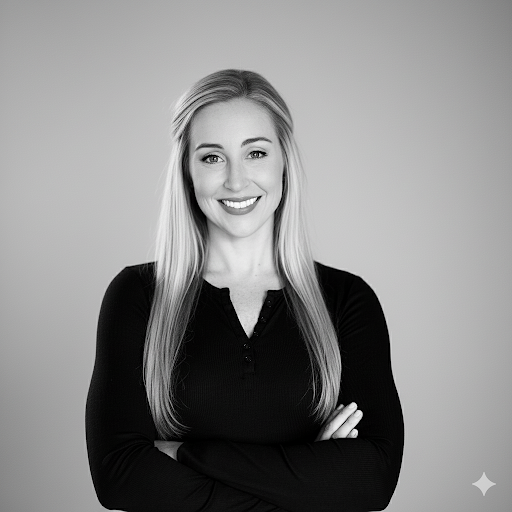
I read something this week that stopped me mid-scroll.
OpenAI released its first ChatGPT Futures class, giving 26 young builders $10,000 each and access to frontier models. One of them is Matteo Paz, an 18-year-old high school student who used machine learning to analyze nearly 200TB of NASA NEOWISE data and flagged 1.9 million infrared variable objects, including roughly 1.5 million unknown candidates.
Ya...I had to ChatGPT what that last sentence even meant. Basically, an 18-year old used AI to sift through an enormous amount of NASA space data and helped identify more than a million potentially unknown objects and events in the universe.
An 18-year-old. High school. No PhD. No postdoc. No lab access. No institutional permission.
And the line that hit me hardest:
"AI is turning anyone with enough taste, obsession, and access into a present competitor."
I felt seen. And I need to tell you why.
My Resume Doesn't Look Like Theirs
I did not go to a prestigious college. I grew up in the Midwest, where I went from community college to my local university and then finished with an accelerated 18-month online master's program through an accredited online university.
This does not look as impressive as the people who come from Ivy Leagues. I know that.
While pursuing my master's in nonprofit administration, I was managing a full-time job in the banking industry. Two sectors that could not be more different. I was learning nonprofit theory during the day and reconciling accounts at night, trying to figure out how any of it connected.
And then I actually entered the nonprofit sector. And I learned very quickly that your job is all the jobs. There is no manual. There is no onboarding that prepares you for the chaos of underfunded, understaffed, mission-critical work.
You just have to figure it out.
What I Have That They Don't
I'm not smarter than people with technical degrees. I want to be clear about that.
But I have something they often don't: eight years of trudging through nonprofit work where the only way forward was discipline, hard work, not taking things personally, and being obsessively curious about making things better.
I am obsessed with making systems run better for nonprofits. Not because it's glamorous. Because it's so obviously doable, and yet so many organizations are stuck not changing.
That obsession is what moved me into a Technology & Innovation Lead role at a national nonprofit. Not a credential. Not a degree in computer science. Not permission from anyone.
I just started learning. And building. And solving problems.
I Didn't Ask Permission
Here's the part that feels vulnerable to admit: most of the time, I spent my own money first.
I subscribed to platforms out of pocket to test my ideas. I paid for tools before I knew if they'd work. I built prototypes on nights and weekends because I wanted to see if the thing in my head could actually exist.
And it paid off. Not because I'm special, but because I was learning the way I liked to learn: by doing. I was applying what I learned directly to my organization. I was solving my colleagues' problems quickly, which made them feel good and made me feel good. And than, I advocated for myself. I had built plenty of proof by that point that I knew what I was talking about.
I built AIforGood Hub because I wanted nonprofits to have a place to learn about AI that wasn't overwhelming. I built Brightnest because I'm a parent who wanted personalized weekend plans for my kids. I built internal tools at Zero Abuse Project because I saw gaps and I knew I could fill them.
And now I'm getting ready to launch ExplainAI - an app that (you guessed it) explains AI. Bite-size lessons, an always-on AI tutor, voice practice, and read-aloud content — all built to make AI feel obvious, not overwhelming.
None of this required a technical degree. It required taste, creativity, obsession, and access. And the access is more available now than it's ever been.
The Gate Moved
The old research model was PhD, postdoc, lab access, institutional permission. You climbed the ladder. You waited your turn. You earned credibility through credentials.
That model isn't dead. But it's no longer the only path.
The gate didn't vanish. It moved. From degree to taste, framing, and execution.
Matteo Paz proved that an 18-year-old with mentors, compute, and AI can attack problems once reserved for credentialed researchers. And he's not alone. The next serious talent in any field may not arrive with a PhD, tenure, or permission My pitch? Let's celebrate that. Especially for us non-traditional, sort-of smart, average folks who are good at executing ideas.
They may arrive with curiosity, obsession, and a willingness to build before they're ready.
What I Want You to Take From This
If you're reading this and you don't have the "right" background, I want you to hear me: you are not disqualified.
"This generation doesn’t have to wait to become experts before getting started. They don’t have to wait for funding before building. They don’t have to wait for permission before contributing." - OpenAI
Once again: I am not that smart. I am just really fascinated with what technology and AI has allowed me to create.
That fascination is enough. That obsession is enough. The willingness to learn by doing, to spend your own money testing ideas (yes, you need to do it), to solve problems without waiting for permission: that is enough.
The nonprofit sector is full of people like me. People who figured it out because they had to. People whose resumes don't sparkle but whose work speaks for itself.
AI is leveling the playing field in ways we're only beginning to understand. And if you have the taste, the obsession, and the access, you can be a competitor too.
Not someday. Now.